30 June 2014

Carlos Bueno: “Inside the Mirrortocracy”

I want to stress the importance of being young and technical.
Young people are just smarter. Mark Zuckerberg

I was in the audience when a 22-year-old Zuck led with that drop of wisdom during his first Startup School talk. It wasn’t a slip of the tongue, it was the thesis of his entire 30 minutes on stage. It would have been forgettable startup blah-blah except that his talk followed Mitch Kapor’s. The contrast could not have been more raw.

Ironically, Zuck had arrived late and didn’t hear Kapor speak. He’s since evolved his views, thanks to Sheryl Sandberg’s influence and (ahem) getting older himself.

Kapor is the legendary founder of Lotus, which more or less kicked off the personal computer revolution by making desktop computers relevant to business. He spoke about the dangers of what he called the “mirror-tocracy”: confirmation bias, insularity, and cliquish modes of thinking. He described the work of his institute to combat bias, countering the anecdotes and fantasies that pass for truth with actual research about diversity in the workplace.

Carlos Bueno

Fascinating article about the hiring process in Silicon Valley corporations and the numerous unwritten rules that can dismiss a candidate before he even had a chance to speak. If it sounds hard to believe, look at the recent disclosures about workforce diversity – or lack thereof – from Google, Facebook and Yahoo: their personnel structures are remarkably similar, even though the companies are quite different in age and development. It’s too bad they didn’t release any data about the age distribution of their employees, that would make for another interesting comparison.

  • Workforce diversity 2014 graph by sex
  • Workforce diversity 2014 graph by ethnicity

Update: more data about workforce diversity from Twitter and Pinterest.
28 June 2014

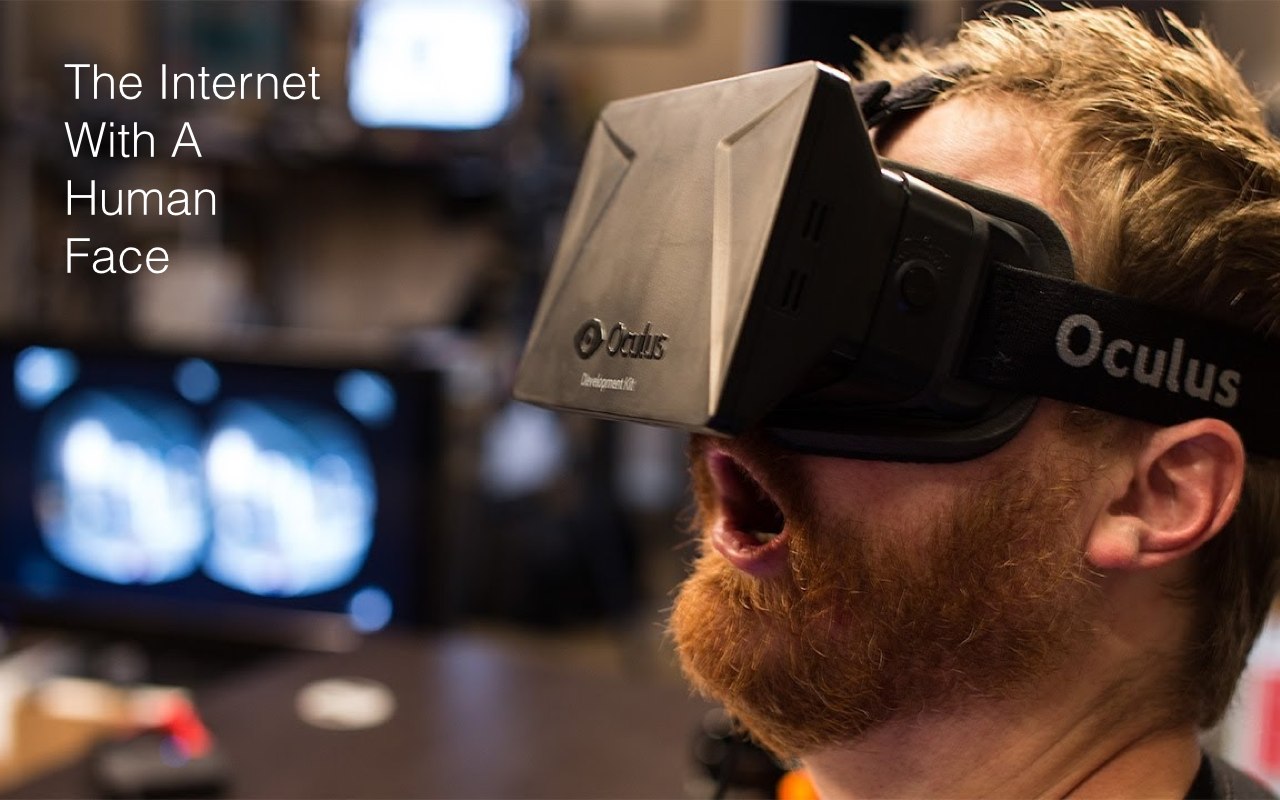
Idle Words: “The Internet With A Human Face”

Well, people hate the online rules! Google’s answer is, wake up, grandpa, this is the new normal. But all they’re doing is trying to port a bug in the Internet over to the real world, and calling it progress. You can dress up a bug and call it a feature. You can also put dog crap in the freezer and call it ice cream. But people can taste the difference. […]

‘Big data’ has this intoxicating effect. We start collecting it out of fear, but then it seduces us into thinking that it will give us power. In the end, it's just a mirror, reflecting whatever assumptions we approach it with. But collecting it drives this dynamic of relentless surveillance.

Maciej Cegłowski

The online discussion around ‘the right to be forgotten’ – to have all records of personal actions removed from online access – has been long and the current solution imposed on search engines by the European Union not really satisfactory. This reprint of a recent conference in Germany makes the best argument for why we need this right, the ability to control the data corporations and states can store about people and for how long, and how the constant collection of data and the promise of future advertising revenue has corrupted the business models of internet giants and start-ups alike. It’s a dark view of the current state of internet surveillance, but sometimes you need a dark vision to step back and react.

Wired: “The Mystery of Go, the Ancient Game That Computers Still Can’t Win”

Many Go players see the game as the final bastion of human dominance over computers. This view, which tacitly accepts the existence of a battle of intellects between humans and machines, is deeply misguided. In fact, computers can’t “win” at anything, not until they can experience real joy in victory and sadness in defeat, a programming challenge that makes Go look like tic-tac-toe. Computer Go matches aren’t the brain’s last stand. Rather, they help show just how far machines have to go before achieving something akin to true human intelligence. Until that day comes, perhaps it’s best to view the Densei-sen as programmers do. “It is fun for me,” says Coulom, “but that’s all.”

Alan Levinovitz

Interesting article about the long and complicated challenge to build a computer algorithm to match and beat humans at playing Go. Due to its complexity, Go is the only deterministic game left where people still outmatch the computing speed of machines. The conclusion sums up my impression perfectly: the problem is not the processing power, but the lack of insight into how exactly the human mind works at solving the game. Without a comprehensive understanding of the brain and consciousness, it will be next to impossible to build human-level artificial intelligence.

A traditional Go gameboard
A traditional Go gameboard. Photo: Takashi Osato/WIRED

27 June 2014

Wired: “Israel is Building a Futuristic Transit System of Magnetic Pods”

Israel’s biggest defense contractor is getting into mass transit, building the world’s first aerial maglev to carry people in egg-like pods around its campus at 44 mph. If all goes according to plan, you may soon see it in Tel Aviv.

SkyTran is a personal rapid transit system that features two-person pods hanging from elevated maglev tracks. As futuristic as that sounds (and looks), the idea has been around since 1990. It’s been suggested in cities ranging from Tempe, Arizona to Kuala Lampur, but the idea never got off the, er, ground.

Alexander George

For improving mass transit in crowded cities, I think something like this would prove more efficient and revolutionary than self-driving cars. It would have less coverage, so it probably wouldn’t drive you to the front door, but reduced air pollution would make it more enjoyable to walk a couple of blocks from the nearest pod station. It would also allow transportation to take advantage of the third dimension, instead of being confined to the ground – skyscrapers for example could be connected directly at some arbitrary floor, reducing the need for elevators. It’s no flying car, but it would get pretty close! Unfortunately, the potential for data mining is rather low, so naturally Silicon Valley corporations are not interested in investing…

SkyTran concept magnetic pod

26 June 2014

The Verge: “Google’s Cardboard turns your Android device into a VR headset”

While Facebook’s virtual reality effort involved a multibillion-dollar purchase of Oculus VR, Google’s gone with a decidedly simpler route: cardboard. Following the end of its Google I/O keynote, Google’s put out an app called Cardboard that lets users slot their Android device into a do-it-yourself cardboard viewer. When looked through using special lenses, you can interact with various Google services like a VR headset.

Josh Lowensohn

I can’t decide if this is an elaborate late April Fools’ joke or an (equally lame) attempt at making fun of for acquiring Oculus. In any case, Cardboard rightfully deserved a place in the top 5 weirdest products, next to the Nexus Q.

Google Cardboard

24 June 2014

Politico: “Google’s states of play”

Google this year has retained a quartet of lobbyists in Maryland to remove any roadblocks facing its fleet of driver-free Priuses. It’s tapped consultants in California, Utah, Georgia and other states where the company has tried to deploy its ultrafast Fiber Internet. In Illinois and beyond, Google has worked to battle back legislation that might affect Glass, its high-tech spectacles. And the tech giant has cozied up to leaders in New York state and New York City, while camping out in Massachusetts to seek changes in state tax laws. […]

Google similarly has trained its sights on new rules that would ban drivers from wearing Glass, its computer, while behind the wheel. Illinois and Delaware are two states that recently have considered such laws — and places where Google has mounted a lobbying defense.

Tony Romm

Interesting addition to my recent article about the future of self-driving cars; it seems already moves to secure their legal acceptance, even while more fundamental issues are a long way from being solved. On one hand it’s a sign of maturity, a sign Google no longer assumes anything with a Google logo will be instantly embraced by people, that building an entirely new product category will face many obstacles from numerous sources. On the other… I’m pretty sure that, if you build an awesome product (and, in this case, secure) that people can’t wait to buy, you will have little trouble getting legal approval for it.

As for Google lobbying to allow drivers to wear Google Glass… unless buyers get a free self-driving car with their Glass purchase, I don’t see how anyone would think Glass is any less distracting than phones and SMS! The days of ‘Don’t Be Evil!’ are long gone.

23 June 2014

terribleminds: “Amazon, Hachette, And Giant Stompy Corporations”

The giant monster — a kaiju, let’s say — does what a giant monster does. It stomps around. It doesn’t stomp people because it hates people. It stomps people on the way to find its breeding ground or on the way to mate with a particularly saucy skyscraper. People end up stomped like grapes because the giant monster couldn’t see them. The bigger it gets, the more it loses sight of people. The more it loses sight of all the little things underneath it. (Like, say, book culture.)

The bacterial colony wants to grow. It wants to replicate. It is programmed to fill space, to colonize — in a way, like humanity has itself done. Given no competition, bacterial colonies bloat exponentially. Seeing competition, some bacteria cheat to become resistant to that competition. Being resistant to antibiotics, for instance, allows bacteria to enter a period of unfettered growth. An epidemic. A pandemic. A holy-fuck-a-demic.

Big companies — Amazon and publishers alike — are big monsters and little bacteria.

They want to grow.

They want to stomp.

It’s their nature.

Chuck Wendig

I should probably stop posting about this Amazon vs. Hachette fight until some sort of conclusion is reached, but this analogy is simply too good not to pass along!