13 April 2015

The New York Times: “Apple Watch Review: Bliss, but Only After a Steep Learning Curve”

What’s more, unlike previous breakthrough Apple products, the Watch’s software requires a learning curve that may deter some people. There’s a good chance it will not work perfectly for most consumers right out of the box, because it is best after you fiddle with various software settings to personalize use. Indeed, to a degree unusual for a new Apple device, the Watch is not suited for tech novices. It is designed for people who are inundated with notifications coming in through their phones, and for those who care to think about, and want to try to manage, the way the digital world intrudes on their lives.


Finding nirvana with the watch involves adjusting your notification settings on your phone so that your wrist does not constantly buzz with information that doesn’t make sense on the Watch — like Facebook status updates, messages from Snapchat, or every single email about brownies in the office kitchen. Apple’s notification settings have long been unduly laborious; battling them while your hand is buzzing off the hook is an extra level of discomfort.

Farhad Manjoo

So the Watch’s main selling point is that it will force people to adjust their notification settings, to not be overwhelmed by the constant buzzing on the wrist? What an indispensable device!

11 April 2015

Lefsetz Letter: “More Tidal”

Tidal’s flaw is it is not user-friendly. All it’s got is a bunch of stars crowing about getting screwed and taking power and a few exclusives which are readily available where people now consume music, i.e. YouTube and BitTorrent. We’ve already seen this movie before. Put the content in a walled garden, tell people to be honest and support rich people, and they ignore this willy-nilly and steal to their hearts’ content, assuming they’re paying attention at all.

And the disconnect is…

We’ve got uber-rich artists complaining they’re just not making enough.

And a plethora of unknown wannabes saying the same thing.

And you wonder why people are confused and turned-off.

Bob Lefsetz

Tidal high fidelity music streaming

Fragmenting the streaming offering by launching exclusives on Tidal and pulling back music from competing services will only push people back to pirating music. Tidal is like bankers saying to people: pay your interest on time so that they can get fat bonuses and buy more yachts.

08 April 2015

Going mobile – ‘Bigger is Better’ edition

As my first was quickly approaching old age (three years is probably about fifty in mobile years), it was high time to get a replacement. I still don’t like Android, mainly because of the jarring design that doesn’t look any better after going Material. And Windows Phone, while appealing, still lacks the high-quality multitude of apps I’ve come to enjoy as iOS user. The choice of ecosystem was made, but what about the hardware? Spoiled by rumors of a larger iPhone, I skipped buying the 5S and waited until the launch of the 6 line last autumn. I wasn’t overly excited about the new look of the iPhone, especially the protruding camera and the weird stripes along the back, and many shared this critique. Even so, wanting a larger iPhone left me with little choice, so, after a long wait as the constrained supplies made their way to my carrier in Romania, I purchased a ‘space grey’ iPhone 6.

iPhone 6 vs iPhone 4 box
The iPhone 6: larger than the box of the iPhone 4S

04 April 2015

The Atlantic: “What ISIS Really Wants”

Denying the holiness of the Koran or the prophecies of Muhammad is straightforward apostasy. But Zarqawi and the state he spawned take the position that many other acts can remove a Muslim from Islam. These include, in certain cases, selling alcohol or drugs, wearing Western clothes or shaving one’s beard, voting in an election—even for a Muslim candidate—and being lax about calling other people apostates. Being a Shiite, as most Iraqi Arabs are, meets the standard as well, because the Islamic State regards Shiism as innovation, and to innovate on the Koran is to deny its initial perfection. (The Islamic State claims that common Shiite practices, such as worship at the graves of imams and public self-flagellation, have no basis in the Koran or in the example of the Prophet.) That means roughly 200 million Shia are marked for death. So too are the heads of state of every Muslim country, who have elevated man-made law above Sharia by running for office or enforcing laws not made by God.

Following takfiri doctrine, the Islamic State is committed to purifying the world by killing vast numbers of people. The lack of objective reporting from its territory makes the true extent of the slaughter unknowable, but social-media posts from the region suggest that individual executions happen more or less continually, and mass executions every few weeks. Muslim “apostates” are the most common victims. Exempted from automatic execution, it appears, are Christians who do not resist their new government. Baghdadi permits them to live, as long as they pay a special tax, known as the jizya, and acknowledge their subjugation. The Koranic authority for this practice is not in dispute.

Graeme Wood

Complementing the report on how ISIS started, this long and well-researched article goes the other way, searching for ISIS’ ultimate goals and fate. Short answer: to bring about the End of Days in a final battle with the armies of Rome.

03 April 2015

Google Chrome Blog: “More Chromebooks, for everyone”

A little bit more...

This summer, ASUS will launch a new type of Chrome device: the Chromebit. Smaller than a candy bar, the Chromebit is a full computer that will be available for less than $100. By simply plugging this device into any display, you can turn it into a computer. It’s the perfect upgrade for an existing desktop and will be really useful for schools and businesses.

Katie Roberts-Hoffman

An interesting idea, that would (almost) tempt me to try ChromeOS. I suspect the prices will go down even more and, probably in a couple of years, will simply offer Chromebits for free (ad-supported, of course).

20 March 2015

Philip Metzger: “Planet Pluto!”

NASA’s New Horizons spacecraft passes Pluto and Charon
Artist’s concept of NASA’s New Horizons spacecraft as it passes Pluto and Pluto’s largest moon, Charon, in July 2015. Image Credit: NASA/JHU APL/SwRI/Steve Gribben

The truth is, we felt the need for a small number of dominant planets because it’s what humans always knew a solar system to be, ever since we looked up to see lights moving in the nighttime sky. We now know better than this, but we haven’t examined ourselves well enough to see this is the origin of our “intuition” about planets. We still think the intuition is somehow natural and therefore right. This response to our intuition is different than what scientists did at the time of Galileo. Back then, we gave up our intuition and radically embraced the new view. It took time and lots of fighting, but that was the outcome. We redefined the central word of planetary science in a way that communicated a scientific revolution. This time, we redefined our central word in a way that communicates business as usual. Faced with the specter of hundreds of new planets cluttering up the crystalline celestial spheres, hundreds of worlds too scattered and under the influence of their larger neighbors, we opted to purge the pantheon instead.

This is disappointing. We rejected the ancient world’s geocentrism. Couldn’t we reject its belief in orderly, reigning planets as well? In my opinion, this is why the public is not more engaged in the central questions of planetary science. We have hidden it from them. We created a vocabulary that focuses attention on the old familiar planets that seem least changeable. We pushed Pluto and the other paradigm-shattering worlds into a lower tier of importance. As a result, we made our branch of science more “intuitive” and a lot less revolutionary.

Philip Metzger

One of the best arguments I’ve seen for keeping Pluto as a planet – and adding the dozens, potentially hundreds, of planetary bodies in the Kuiper Belt to the list. All the major breakthroughs in science came from people abandoning ‘the old ways’, changing the traditional view of the world with new data and thinking. This recent definition of ‘planets’ puts up artificial barriers instead of enabling us to look at the solar system as a whole that evolved together.

17 March 2015

Archagon Was Here: “Who cares about the Apple Watch Edition?”

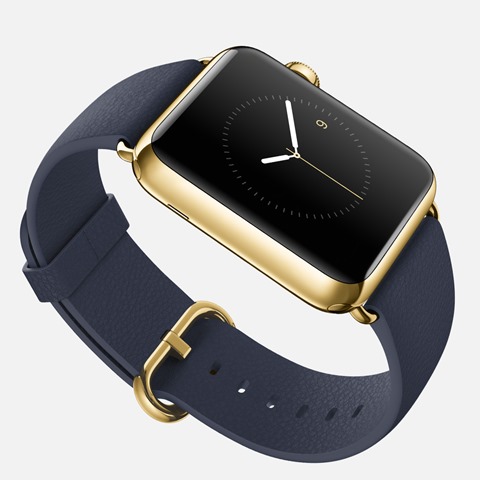
Apple Watch Edition

My question is: why in the least bit should us techies care? Sure — catering to the unfathomably well-off will make an impact on Apple’s fortunes in the long run, and spinning out into a fashion brand might make the company grow at an even more breakneck pace. But I was under the impression that we were Apple fans in the first place because they made best-in-breed products for everyone, not just the elite.


An Apple that sells “bling” to billionaires is not a company that many of us could muster any passion about. Maybe Woz had the right idea all along.

Alexei Baboulevitch

There has always been a fair amount of idealism in tech, the idea that it will ultimately make the world a better place, and people’s feelings often get hurt when ideals are confronted with harsh reality. The same thing happened as people started to realize ’s ‘Don’t be evil’ motto got abandoned along the way, pushed aside by corporate interests.