05 May 2015

MediaNama: “Facebook’s Internet.org platform is a privacy nightmare”

First up, no matter what Facebook says about Internet.org being a means of promoting Internet usage, it isn’t. It’s a fundamental, permanent change in the way the Internet works by splitting it into free vs paid access. It isn’t the same as giving someone Rs 10 of data access or even 100 mb. It is a permanent shift.


Without https (secure content), this means that telecom operators will also be able to snoop on your users, and through them, so will the government. Is Privacy a small price to pay for free access to a directory of services? Should the fact that India doesn’t have a privacy law be a factor in allowing Facebook to launch Internet.org?

Nikhil Pahwa

Did anybody expect anything less from ? After all, airplanes and drones are not cheap, neither are server farms. Facebook needs to justify these investments before stockholders; what better way to do this than by growing its potential user base and the amount of collected personal data?

04 May 2015

Clean up bookmarks in Google Chrome

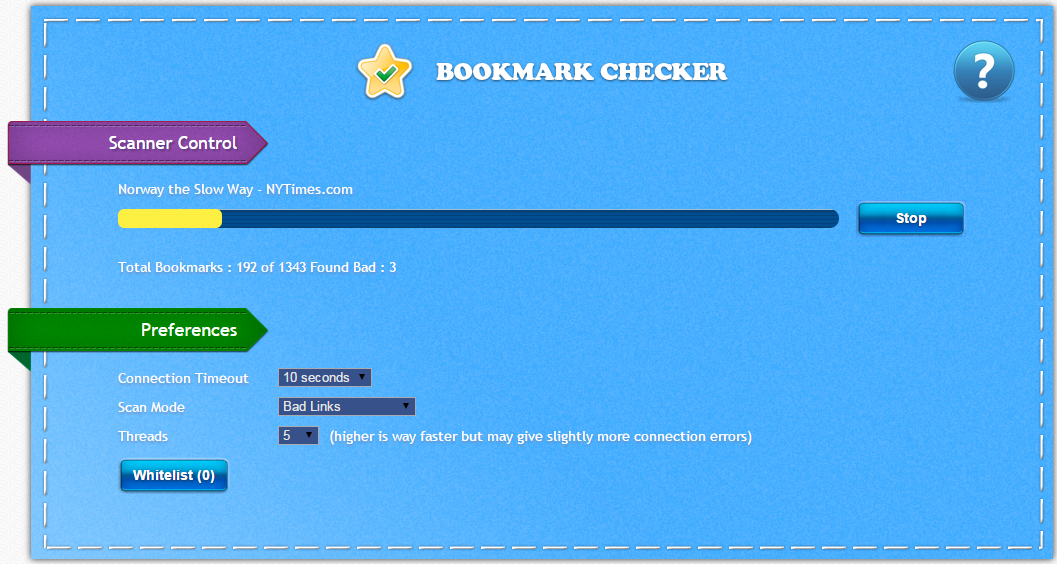
I’ve been browsing regularly for years and collecting all sorts of links in my bookmarks, for work, hobbies or as reference for future blog posts – as I’m sure many people have. Over time, my bookmarks have accumulated duplicated and possibly obsolete sites. I’ve been meaning to clean them up for a long time, but doing that manually seemed too tedious. Fortunately I recently discovered an extension that does most of the work, called Bookmark Checker. After you get past the awful interface – I’m sure those useless graphic files make up most of the bulk of the extension – it’s easy to use and efficient. You just select the type of scan (for example bad links, duplicates or empty folders) and wait for the process to complete. Checking for bad links was the longest task, and it removed nearly one hundred bookmarks out of about 1300. You can manually review the results before removing the links if you want to keep some of them anyway. The duplicate check is super-useful, as I had a lot of bookmarks imported from previous browsers in different folders that I would never have found by myself. After you’re done, the extension can be removed from Chrome, since this kind of clean-up is not something you do daily – more like once a year.

Chrome Bookmark Checker scan in progress

via Gary Gurnicz

Mozilla Security Blog: “Deprecating Non-Secure HTTP”

After a robust discussion on our community mailing list, Mozilla is committing to focus new development efforts on the secure web, and start removing capabilities from the non-secure web. There are two broad elements of this plan:

  1. Setting a date after which all new features will be available only to secure websites
  2. Gradually phasing out access to browser features for non-secure websites, especially features that pose risks to users’ security and privacy.
Richard Barnes

I’ve been critical of ’s decision to give better ranking to secure websites and all the points covered there apply here as well. What Mozilla is proposing is much, much worse: at some point in the future, you will no longer be able to access HTTP-only websites in ! This will effectively cut out a large portion of the Internet, removing legacy content from the public eye.

03 May 2015

La vânătoare de aurore deasupra Cercului Polar

Reîntors la aeroport, mi‑am căutat un loc liniștit și am așteptat citind sosirea celorlalți de la Amsterdam. Weekend‑ul prelungit la Oslo nu fusese decât încălzirea pentru o călătorie mai exotică către nordul Norvegiei, unde speram să văd și să fotografiez aurora boreală. Fusese aproape o decizie de moment, cu doar o lună-două înainte văzusem pe Twitter că s‑a eliberat un loc la tura lui Alex Conu, îl contactasem și‑mi rezervasem zboruri și cazarea în Oslo, iar acum stăteam la masă cu ceilalți, urmărindu‑i în timp ce se aruncau asupra mâncării din aeroport, înfometați de drumul de jumătate de zi din București. Și până în insulele Lofoten mai era ceva de mers.

După zborul nocturn cu SAS, am ajuns în Bodø aproape de miezul nopții. Am trimis bagajele mai voluminoase înainte cu un taxi și restul am pornit pe jos prin orășelul adormit spre țărm, însoțiți de poveștile lui Alex despre zăpezile care acopereau străzile și casele din jur cu șase luni înainte, la sfârșitul primăverii. Ne‑am intersectat de câteva ori cu singurul locuitor treaz, un tânăr pe skateboard tras de câinele lui împodobit cu lumini fosforescente – probabil la fel de surprins de procesiunea noastră ca noi de apariția lui. În schimb navetiștii adormiți în sala de așteptare a feribotului au ignorat complet agitația noastră în timp ce aranjam bagajele, verificam orarul cursei către Moskenes și deliberam dacă să luăm pastile contra răului de mare.

02 May 2015

The New York Times: “Iran and the Obama Doctrine”

We are powerful enough to be able to test these propositions without putting ourselves at risk. And that’s the thing… people don’t seem to understand, the president said. You take a country like Cuba. For us to test the possibility that engagement leads to a better outcome for the Cuban people, there aren’t that many risks for us. It’s a tiny little country. It’s not one that threatens our core security interests, and so [there’s no reason not] to test the proposition. And if it turns out that it doesn’t lead to better outcomes, we can adjust our policies. The same is true with respect to Iran, a larger country, a dangerous country, one that has engaged in activities that resulted in the death of U.S. citizens, but the truth of the matter is: Iran’s defense budget is $30 billion. Our defense budget is closer to $600 billion. Iran understands that they cannot fight us. … You asked about an Obama doctrine. The doctrine is: We will engage, but we preserve all our capabilities.

The notion that Iran is undeterrable — it’s simply not the case, he added. And so for us to say, Let’s try — understanding that we’re preserving all our options, that we’re not naïve — but if in fact we can resolve these issues diplomatically, we are more likely to be safe, more likely to be secure, in a better position to protect our allies, and who knows? Iran may change. If it doesn’t, our deterrence capabilities, our military superiority stays in place. … We’re not relinquishing our capacity to defend ourselves or our allies. In that situation, why wouldn’t we test it?

Thomas L. Friedman

To me, this approach comes off as both ignorant and arrogant. To test possibilities implies that you don’t know your opponent well enough to have a constructive dialog. To say Iran cannot fight us implies a position of superiority that shouldn’t be emphasized in negotiations, even if both parties know it’s a fact. Don’t get me wrong, any diplomatic solution to the cold war with Iran is better than escalation of conflict, I just think it should be handled better than ‘We’re America, you cannot fight us, so here!’.
Bloomberg Business: “The American Woman who stands between Putin and Ukraine”

Putin vs. the Accountant

Ukraine is one of the few countries in Europe without a 3G network because of an oligarchic shell game played out under the Yanukovych regime. The Poroshenko government recently completed a transparent sale of 3G licenses to several telecom companies, which will inject a total of almost $300 million into state coffers. Ukraine can celebrate building 3G—while the rest of the industrialized world is planning 5G. This is where Ukraine is today, caught between idealism and despair. The reforms that have come have been so slow that, to some, reform can seem a joke.

Brett Forrest

The most shocking fact from this article: no 3G – in Europe – in 2015! Makes you feel Romania is decades ahead, even though ‘reform’ sounded like a bad joke for such a long time around here as well.

01 May 2015

TechCrunch: “Microsoft announces Continuum, turning Windows 10 Phones into Desktops”

In an on-stage demo, Microsoft’s Joe Belfiore connected a phone to a monitor, keyboard and mouse, and instantly the UI he was using adapted to the new inputs and outputs. While the operating system interface we saw on screen didn’t look exactly like Windows 10 on a laptop or desktop computer, the applications shown (especially PowerPoint) did. Instead of making minor adjustments to a presentation using a 5-inch screen, you can simply connect to an HDMI-compatible monitor and have all the space and tools you would on a full PC.

Kyle Russell

Sounds very similar to ’s recently announced Chromebits, but without the hassle of buying an extra device and figuring out how to actually control the larger display. Could be interesting, for example as business device to replace laptops while traveling or working away from the office.

See how new Continuum functionality for mobile phones tailors the app experience across devices to transform a phone into a full-powered PC