25 February 2013

What’s new in Chrome 26

Google Chrome 26 web style context menuAfter a longer-than-usual cycle of two months – no doubt due to the joint Christmas and New Year holidays – 26 has graduated from the dev channel. The first major change users will notice is a drastic change in the look of menus, from the system menu to context menus. Chrome is replacing all native-style menus with a design more reminiscent of the web and Google+, with bigger text and lots of whitespace. Overall I like the idea of unifying the design across platforms – it resembles the iOS version a little better as well – but on the other hand it will start looking different from all the other software on the respective OS’ – foreign even – and the design consistency inside Chrome is broken as well: tabs, controls and scrollbars are styled like the OS, while the menus (and increasingly dialog boxes) look like they come from a web app. Also the new menus are too big, almost too big to fit inside a lower resolution screen. The malware landing page received a similar redesign in the Google+ style.

There are a couple of updates related to WebRTC, a standard for Internet communication supported by both Google and Mozilla. Starting with this version there will be an indicator in the Omnibox whenever a website request access to your local camera and microphone. From there you can allow or deny access; this control is also available in the Chrome settings, Content section. Chrome also introduced a new internal page, chrome://webrtc-internals, where you can track the active connections through WebRTC.

24 February 2013

Neil Gaiman - Stardust

in Bucharest, Romania

Neil Gaiman StardustPe vremea când Dickens publica Oliver Twist, Morse inventa telegraful și Regina Victoria era încă nouă pe tronul Angliei, pe când magia era depășită în ritmul căilor ferate de pragmatismul științei, un mic sat din estul Angliei încă mai simte atingerea celeilalte lumi atunci când vântul bate dinspre răsărit. Căci dincolo de Zidul care dă numele acestui sat începe Tărâmul Zânelor, lumea unde domnesc în continuare magia și imaginația. Trecerea Zidului e interzisă pentru oameni cu excepția târgului organizat odată la nouă ani. În urma lui satul se îmbogățește câteodată cu animale cu blana de culori ciudate sau cu nou‑născuți cu urechi ascuțite – așa cum a fost cazul eroului poveștii de față, Tristan Thorn. Două târguri mai târziu, apropiindu‑se de vârsta de optsprezece ani, Tristan îi promite tinerei de care e îndrăgostit, Victoria Forester, o stea de pe cer, la propriu: steaua pe care au văzut‑o amândoi noaptea căzând în Tărâmul Zânelor. Această promisiune pripită îl duce peste zid, departe de casă în inima întortocheată a tărâmului care îl pune la încercare pe necunoscătorul tânăr la fiecare pas. Pe deasupra, el nu e singurul care caută steaua căzută: surorile-vrăjitoare Lilim îi doresc inima, sursă a tinereții veșnice, iar moștenitorii regatului Stormhold vor să recupereze nestemata pe care o poartă steaua la brâu, simbolul puterii regale din Stormhold.

But Faerie is bigger than England, as it is bigger than the world (for, since the dawn of time, each land that has been forced off the map by explorers and the brave going out and proving it wasn’t there has taken refuge in Faerie; so it is now, by the time that we come to write of it, a most huge place indeed, containing every manner of landscape and terrain).

21 February 2013

Share full-text articles by email from mobile Safari

If you’re an iPhone user like me, you’re probably familiarized with sending pages by email from mobile Safari: tap on the ‘Share’ button and you get a new email, prepopulated with the article title in the subject and the address in the body. But if you want to send the entire body, things get more complicated: you have to first select the body, then share and paste it… By chance I noticed the other day there is a quicker way. iOS 5 added the ‘Reader’ mode for Safari, which strips the page of ads, navigation and other distractions and lets the user focus on the main content. And if you use the ‘Share’ button from Reader, the mail body will automatically pick up the entire article, including title and any pictures, as formatted by Reader. It’s a nice option to have and speeds things up considerably. Unfortunately, neither method allows sharing only a specific selection by mail, the moment you click ‘Share’ the selection is discarded.

  • iOS share article by mail from Safari
    Share article by mail from Safari
  • iOS share article by mail from Reader mode
    Share article by mail from Reader mode

16 February 2013

What’s new in Office 2013

As most software packages strive for faster update cycles dragging hardware along with it, Microsoft Office has kept a steady and slow update cycle of about three years for more than a decade. Being a product mostly aimed at corporate customers it’s not that unexpected; corporations tend to be conservative with their expenditures, especially in times of economic uncertainty. The new Office version was released at the end of January; having used the preview for the past six months, I have noticed a long list of nice new features, as well as some things that don’t quite work as they should.

The most notable change for me is the ability to add spelling dictionaries for other languages; in previous versions the process was more complicated and, as far as I remember, you had to pay extra for each language you installed. Extra dictionaries come in very handy both for home use and for work when you communicate in several languages. Before Office 2013 I used to upload texts written in Romanian to SkyDrive and use the online spell-checker there, but now this step is no longer needed. Close behind on the list of most useful new features is the ability to open and edit PDF documents in Word. I was a little surprised to hear about this one, you would think Adobe would prefer people to use – and pay – for their own software! Microsoft and Adobe probably have some license arrangement covering this; in any case I have used it several times to reformat some articles for my Kindle and works remarkably well for text documents, even if it’s a bit slow.

10 February 2013

Henry Miller - Zile liniștite la Clichy

in Bucharest, Romania
Henry Miller Zile linistite la Clichy
S‑ar putea chiar să devii atât de legat de locul în cauză încât să constați într‑o bună zi că întreaga viață ți s‑a preschimbat, iar ceea ce pe vremuri ți se părea sordid, meschin, mizerabil, a devenit acum încântător, tandru, frumos.

O observație foarte potrivită despre Paris, după cum am constatat și eu anul trecut. În ciuda începutului cuminte și a titlului înșelător, cele două povestiri reunite în acest volum au toate caracteristicile romanelor mai faimoase ale lui Henry Miller: mizeria generală a străzilor sordide din Montmartre și particulară a personajelor și a femeilor ușoare care apar în toate formele și din toate direcțiile, scene de sex necenzurat, goana frenetică după bani pentru a plăti următoarea masă – și următoarea curvă, abundența cuvintelor indecente începând cu litera p; dar și pasaje cu reflecții asupra vieții, oamenilor și locurilor vizitate. La pudeur nu își are locul între paginile cărții și personajele cu acest „defect” sunt rapid marginalizate din orgia celorlalți. Dacă n‑ați citit până acum nimic scris de Henry Miller poate ar fi un punct bun de plecare: suficient de consistent ca să vă faceți o idee generală și destul de scurt ca să nu regretați timpul pierdut dacă nu‑l găsiți pe gustul vostru. Mie îmi aduce oarecum aminte de Chuck Palahniuk; dacă la Miller totul se învârte în jurul sexului, Palahniuk acordă rolul central în romanele sale morții și distrugerii.

Deși numele personajelor sunt schimbate – autorul Joey și prietenul său Carl – evenimentele sunt clar inspirate din propriile experiențe ale lui Miller la Paris; de exemplu la un moment dat Joey menționează că tocmai a terminat romanul Primăvara neagră. Probabil n‑o să știm niciodată cât din ele sunt adevărat și cât ficțiune, și până la urmă nici nu contează asta prea mult. Ceea ce rămâne după vârtejul întâlnirilor și despărțirilor erotice este pofta de viață a autorului, setea de noi experiențe și dezgustul față de stagnare și conformism, care se traduc în intensitatea scrisului și în fascinația cititorului. Dacă citatul de mai sus e valabil pentru Paris, eu unul nu pot citi ce‑a scris Henry Miller fără să am același sentiment față de opera lui.

Ce idee! Ce idee sănătoasă! I‑am invidiat flegmatismul, indolența, nepăsarea. Trebuia s‑o fac să vorbească despre asta mai pe larg, cum e să nu faci nimic, adică. Era un ideal cu care nu cochetasem niciodată. Pentru a‑l duce la îndeplinire, cineva trebuie să aibă o minte perfect goală – sau poate una prea plină. Ar fi preferabil, mă gândeam atunci, să fie una goală.

09 February 2013

Notifications from Facebook friends

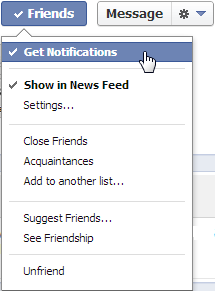
Facebook get notifications from FriendsAfter enabling users to follow individual posts from friends without commenting, added another option to get notifications from individual friends whenever they post. It can be enabled from a friend’s profile by hovering over the ‘Friends’ button/menu – on the desktop at least, there is no trace of this in the mobile app. The feature seems a bit redundant, given that you can add those connections to ‘Close Friends’ and enable notifications for that list.

On the other hand, I couldn't help but notice that list management has been quietly hidden away from the interface: on the desktop, as you can see in the screenshot, it requires an extra click to open the menu ‘Add to another list…’. It’s even worse in the iOS app, where at some point the option to add friends to lists from their profile has been completely removed. I know this is a very obscure feature for the average Facebook user (everyone I know just relies on the newsfeed to see new updates) but I don’t like to see features I am relying on being hidden away and possibly removed.

06 February 2013

Birthday notifications from Google+

Google Plus birthday notifications on the search homepageI’m not a big fan of Google+ and use it very infrequently, but from time to time new features pop up in places where you can’t ignore them – like the search homepage. A couple of days ago I just noticed a notification about the birthday of a Google+ contact, on the top right, under the ‘Share’ button. Curiously, it only shows up in Internet Explorer 9 at my office, and in none of my home browsers, so it’s possibly a limited experiment or something tied to the IP address. Leaving the usual ‘who’s copying who?’ debate aside, there are a couple of things wrong with this picture:

  • First of all the notification looks like an ad – you know, the one nagging users to try out a faster browser – so the first instinct is to dismiss it.
  • Secondly – and more important – I think this says a lot about the direction (or lack of) of Google+. Google keeps going on and on about how this is not meant to compete with , that it’s just an extra layer for Google services, etc., but they are still adding Facebook-like features! If Google+ wants to be a community based on shared interests – like – birthday reminders are pointless to the point of spamming. Who would want to know when all the people they follow on Twitter celebrate their birthdays?!
  • Also, I find it funny how notifications only appear on the search page, not inside Google+, as one would expect. It’s like they are silently admitting how few people actively use Google+!