10 February 2013

Henry Miller - Zile liniștite la Clichy

in Bucharest, Romania
Henry Miller Zile linistite la Clichy
S‑ar putea chiar să devii atât de legat de locul în cauză încât să constați într‑o bună zi că întreaga viață ți s‑a preschimbat, iar ceea ce pe vremuri ți se părea sordid, meschin, mizerabil, a devenit acum încântător, tandru, frumos.

O observație foarte potrivită despre Paris, după cum am constatat și eu anul trecut. În ciuda începutului cuminte și a titlului înșelător, cele două povestiri reunite în acest volum au toate caracteristicile romanelor mai faimoase ale lui Henry Miller: mizeria generală a străzilor sordide din Montmartre și particulară a personajelor și a femeilor ușoare care apar în toate formele și din toate direcțiile, scene de sex necenzurat, goana frenetică după bani pentru a plăti următoarea masă – și următoarea curvă, abundența cuvintelor indecente începând cu litera p; dar și pasaje cu reflecții asupra vieții, oamenilor și locurilor vizitate. La pudeur nu își are locul între paginile cărții și personajele cu acest „defect” sunt rapid marginalizate din orgia celorlalți. Dacă n‑ați citit până acum nimic scris de Henry Miller poate ar fi un punct bun de plecare: suficient de consistent ca să vă faceți o idee generală și destul de scurt ca să nu regretați timpul pierdut dacă nu‑l găsiți pe gustul vostru. Mie îmi aduce oarecum aminte de Chuck Palahniuk; dacă la Miller totul se învârte în jurul sexului, Palahniuk acordă rolul central în romanele sale morții și distrugerii.

Deși numele personajelor sunt schimbate – autorul Joey și prietenul său Carl – evenimentele sunt clar inspirate din propriile experiențe ale lui Miller la Paris; de exemplu la un moment dat Joey menționează că tocmai a terminat romanul Primăvara neagră. Probabil n‑o să știm niciodată cât din ele sunt adevărat și cât ficțiune, și până la urmă nici nu contează asta prea mult. Ceea ce rămâne după vârtejul întâlnirilor și despărțirilor erotice este pofta de viață a autorului, setea de noi experiențe și dezgustul față de stagnare și conformism, care se traduc în intensitatea scrisului și în fascinația cititorului. Dacă citatul de mai sus e valabil pentru Paris, eu unul nu pot citi ce‑a scris Henry Miller fără să am același sentiment față de opera lui.

Ce idee! Ce idee sănătoasă! I‑am invidiat flegmatismul, indolența, nepăsarea. Trebuia s‑o fac să vorbească despre asta mai pe larg, cum e să nu faci nimic, adică. Era un ideal cu care nu cochetasem niciodată. Pentru a‑l duce la îndeplinire, cineva trebuie să aibă o minte perfect goală – sau poate una prea plină. Ar fi preferabil, mă gândeam atunci, să fie una goală.
09 February 2013

Notifications from Facebook friends

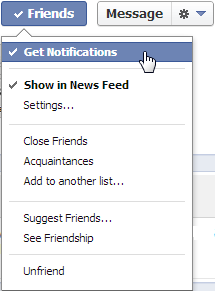
Facebook get notifications from FriendsAfter enabling users to follow individual posts from friends without commenting, added another option to get notifications from individual friends whenever they post. It can be enabled from a friend’s profile by hovering over the ‘Friends’ button/menu – on the desktop at least, there is no trace of this in the mobile app. The feature seems a bit redundant, given that you can add those connections to ‘Close Friends’ and enable notifications for that list.

On the other hand, I couldn't help but notice that list management has been quietly hidden away from the interface: on the desktop, as you can see in the screenshot, it requires an extra click to open the menu ‘Add to another list…’. It’s even worse in the iOS app, where at some point the option to add friends to lists from their profile has been completely removed. I know this is a very obscure feature for the average Facebook user (everyone I know just relies on the newsfeed to see new updates) but I don’t like to see features I am relying on being hidden away and possibly removed.

06 February 2013

Birthday notifications from Google+

Google Plus birthday notifications on the search homepageI’m not a big fan of Google+ and use it very infrequently, but from time to time new features pop up in places where you can’t ignore them – like the search homepage. A couple of days ago I just noticed a notification about the birthday of a Google+ contact, on the top right, under the ‘Share’ button. Curiously, it only shows up in Internet Explorer 9 at my office, and in none of my home browsers, so it’s possibly a limited experiment or something tied to the IP address. Leaving the usual ‘who’s copying who?’ debate aside, there are a couple of things wrong with this picture:

  • First of all the notification looks like an ad – you know, the one nagging users to try out a faster browser – so the first instinct is to dismiss it.
  • Secondly – and more important – I think this says a lot about the direction (or lack of) of Google+. Google keeps going on and on about how this is not meant to compete with , that it’s just an extra layer for Google services, etc., but they are still adding Facebook-like features! If Google+ wants to be a community based on shared interests – like – birthday reminders are pointless to the point of spamming. Who would want to know when all the people they follow on Twitter celebrate their birthdays?!
  • Also, I find it funny how notifications only appear on the search page, not inside Google+, as one would expect. It’s like they are silently admitting how few people actively use Google+!

05 February 2013

Baekdal: “Can Brands use Facebook Graph Search For Anything?”

Right now, Facebook Graph Search claims to be a 'natural language search engine'. It’s not. Not even close. It is actually an assisted keyword engine. That may sound very technical, but it’s an important distinction.

A natural language search engine understands what your question is and finds a result even if it doesn’t match the specific words that you use. An assisted keyword engine only looks at the actual words and how they are ordered.

Why is this important you ask? Well, it means that unless you search specifically for categories Facebook has defined, you won’t find anything. For instance, if instead of searching for clothing stores (a business word that nobody uses) you search for fashion stores, you won’t find anything. Thomas Baekdal

Some hands-on experience with ’s latest product. As with most things Facebook, it has a hard time living up to the media hype.

04 February 2013

Bugzilla: “Convert Panorama into an add-on and remove it from Firefox”

Panorama has a very small user base and there's basically no chance that we will enable it by default or even improve its visibility and discoverability anytime soon. In its current form it is indeed quite fragile and causes intermittent test failures here and there when touching platform code. We're not going to spending any time on improving Panorama and its feature or its design and UX - thus it should just be removed from Firefox. Tim Taubert

About time!

Unfortunately Mozilla didn’t learn anything from this failed experiment and insists on wasting its limited resources on features that can be best served as add-ons – case in point: the built-in Facebook Messenger!

via Sören Hentzschel

03 February 2013

Alastair Reynolds - Pushing Ice

in Bucharest, Romania

Alastair Reynolds Pushing IceLa mai puțin de 50 de ani în viitor față de prezent, echipajul de circa 150 de oameni al navei miniere Rockhopper își desfășoară activitatea de rutină pe orbita unei comete, pregătind‑o pentru a fi mutată în sistemul solar interior și exploatată pentru resursele de apă și alte materiale volatile. Misiunea lor se schimbă radical atunci când agențiile de știri încep să vuiască cu o noutate surprinzătoare: Janus (un nume foarte potrivit pentru situația de față) și‑a părăsit orbita în jurul lui Saturn și accelerează în afară sistemului solar, undeva în direcția stelei Spica. Telescoapele îndreptate spre el arată rapid că sub suprafața falsă de gheață se ascundeau de fapt mașinării străine, iar în sistemul Spica se găsește o structură extraterestră gigantică, spre care se îndreaptă cel mai probabil Janus. Cum Rockhopper e singura navă care poate ajunge din urmă și studia satelitul înainte de a se pierde în spațiul interstelar, președintele corporației DeepShaft, care deține nava minieră, o trimite în urmărirea lui Janus promițând bonusuri generoase întregului echipaj.

Pushing Ice e un roman destul de tipic pentru Alastair Reynolds și are numeroase paralele cu cărțile din mai vastul univers Revelation Space. Aș putea chiar afirma că, pentru cineva care nu l‑a citit până acum pe Reynolds, e un punct de start mai potrivit, pentru că acoperă multe teme similare într‑o carte mai scurtă decât o trilogie plus numeroase alte povestiri. De la ideea principală a universului ostil, neîndurător cu viața inteligentă, și a rarității acesteia de‑a lungul vastelor spații și ere galactice la extratereștrii complecși, non-umanoizi, cu tehnologii cu mult peste puterea umană de înțelegere, la limita insurmontabilă a vitezei luminii, Reynolds le bifează pe toate în roman. Avem parte de urmăriri în spațiu, ca în Galactic North și Redemption Ark; de o introducere și încheiere desfășurată mult în viitor față de romanul principal ca și Absolution Gap. Aici prologul ne introduce în Congresul Inelului Lindblad, undeva la 18.000 de ani în viitor, unde senatoarea Chromis Pasqueflower Bowerbird prezintă în fața reprezentanților politici un proiect extrem de ambițios de rememorare a Binefăcătoarei din trecutul îndepărtat. Trebuie să recunosc că acest început m‑a derutat, pentru că nu semăna deloc cu acțiunea pe care o așteptam; dar Reynolds știe ce face și diversiunea aste devine de importanță crucială mai apoi. Pentru cititorii avizați e o ocazie de a fi cu un pas înaintea personajelor și de a intui multe din revelațiile de mai târziu, inclusiv scala temporală imensă pe care se desfășoară romanul.

02 February 2013

A List Apart: “More Thoughts About Blockquotes than are Strictly Required”

But: We have a semantic problem. There’s nothing meaningful, other than proximity, to tell us (or machines) that the p tag that follows the blockquote should be considered part of the same content (the class isn’t sufficient, according to the spec, and without the quote, the citation becomes a non-sequitur). So, we went looking for a semantic element to wrap this pattern in, and for a few reasons, we arrived at figure:

<figure class="quote">
  <blockquote>It is the unofficial force—the Baker Street irregulars.</blockquote>
  <figcaption>Sherlock Holmes, <cite>Sign of Four</cite></figcaption>
  </figure>

Not only does the spec for figure perfectly align with our needs, it even comes with the convenient figcaption element; a perfect container for our citation. Tim Murtaugh

Call me short-sighted, but how is using an element originally intended for images to enclose quoted text any less of a semantic problem?! I don’t see any reference to text in the current spec and no reason to extend it for this use only because the other options are slightly worse. This is a case where the spec should adapt to real-world use, not the other way around.